CRM in Long Line Operations: Why Your Ground Crew Matters More Than You Think

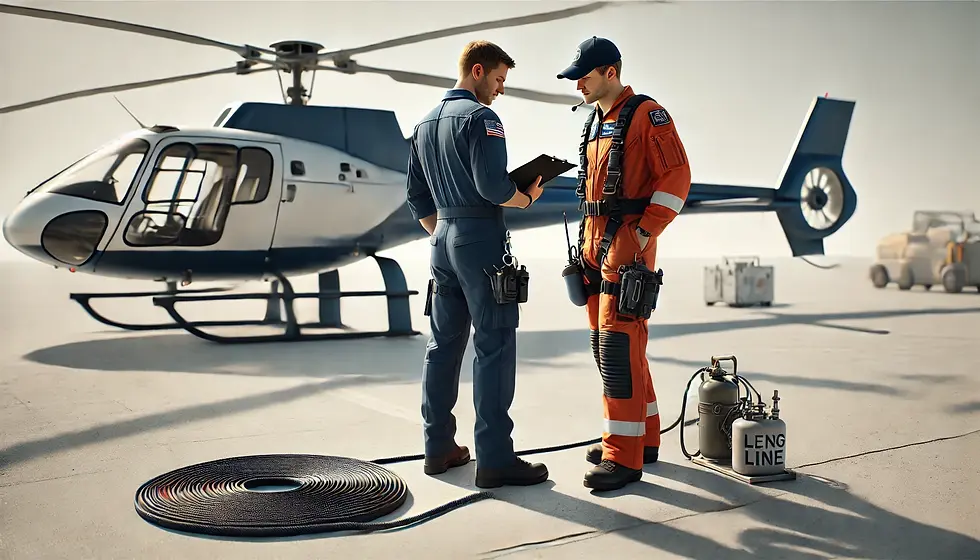
When people think about long line flying, the focus is usually on the pilot. The aircraft, the load, and the precision required to place it all seem to center around what’s happening in the cockpit.
But in reality, long line operations are rarely a solo effort.
They are a team operation, and the quality of that team especially the ground crew has a direct impact on safety and performance.
Crew Resource Management (CRM) in this context goes beyond communication between pilots. It includes how effectively you work with the people on the ground who are rigging loads, guiding placements, and managing the worksite environment.
A well-coordinated ground crew can make a difficult job feel manageable. Clear signals, consistent procedures, and good situational awareness on the ground all contribute to smoother operations. The pilot is able to focus on flying the aircraft, knowing that the load is properly prepared and that communication is reliable.
On the other hand, a poorly coordinated crew can introduce risk very quickly.
Miscommunication, unclear hand signals, or inconsistent rigging practices can create confusion at critical moments. The pilot may be forced to divide attention between flying, interpreting signals, and trying to anticipate what the ground crew is doing. This increases workload and reduces safety margins.
In long line operations, where the pilot is often already operating at a high level of task saturation, these additional variables matter.
That’s why effective CRM starts before the aircraft even leaves the ground. Pre-job briefings, clear roles and responsibilities, and agreed-upon communication methods are essential. Everyone involved needs to understand not just what they are doing, but how their actions affect the overall operation.
It’s also important for pilots to recognize when something isn’t working. If communication breaks down or procedures aren’t being followed, speaking up isn’t just acceptable—it’s necessary. Taking the time to reset and re-align the team can prevent small issues from turning into larger problems.
At its core, long line flying is about coordination. The pilot, the aircraft, and the ground crew all form part of the same system. When that system works well, operations are efficient and safe. When it doesn’t, even simple tasks can become unnecessarily complex.
Understanding and applying CRM principles in this environment isn’t optional it’s a fundamental part of being an effective long line pilot.
Comments