The Importance of Equipment Inspection in Long Line Operations

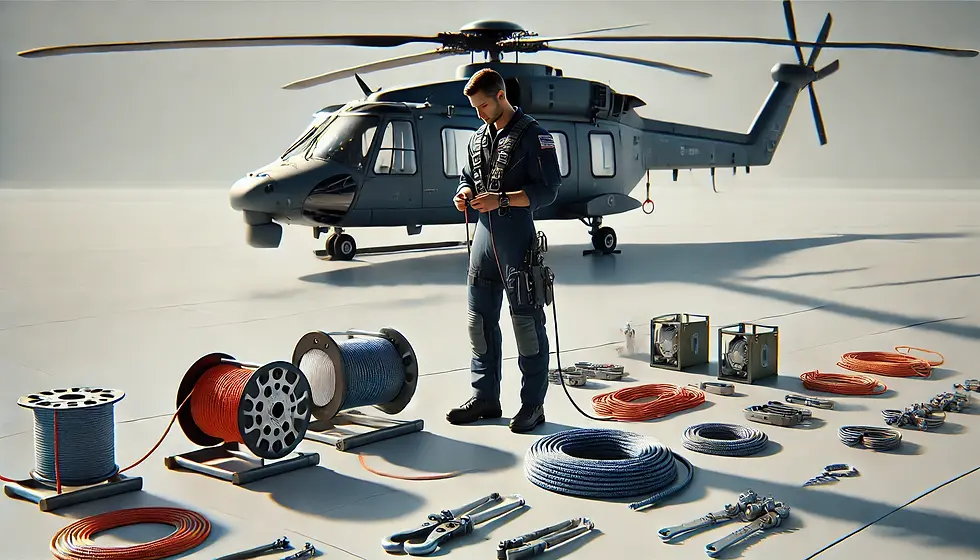
In long line flying, the focus is often on skill precision, control, and the ability to manage complex environments. But behind every successful operation is something less visible and just as important: the condition of the equipment.
Unlike many other types of flying, external load operations rely heavily on components that are exposed to constant stress and environmental wear. Long lines, cargo hooks, nets, and rigging equipment are all safety-critical, and their condition can change quickly depending on how and where they are used.
Over time, materials degrade.
Synthetic ropes can weaken from repeated loading cycles, especially when exposed to extreme temperatures, UV radiation, or moisture. Dust, sand, and debris can work their way into fibers and connectors, accelerating wear. Even something as simple as improper storage can reduce the lifespan of equipment.
In certain operations, the environment adds additional strain. For example, equipment used during firefighting operations may be exposed to heat, ash, and sharp debris. Cargo nets can return from a job with melted sections or damaged webbing that isn’t immediately obvious at first glance.
Chemical exposure is another often-overlooked factor. Oils, fuels, cleaning agents, and lubricants can all compromise synthetic materials if they come into contact with ropes or lifting gear. What looks like a minor contamination can lead to a significant reduction in strength over time.
Because of this, regular inspection isn’t just good practice it’s essential.
Pilots and crews need to develop a habit of checking equipment frequently, not just at scheduled intervals but as part of the daily routine. This includes looking for signs of wear, damage, or contamination, and understanding when something is no longer fit for use.
It’s also important to create an environment where concerns about equipment can be raised without hesitation. If something doesn’t look right, it’s always better to stop and address it than to assume it will hold for one more lift.
In many cases, equipment failure doesn’t happen suddenly. It develops gradually, with small signs appearing along the way. The key is recognizing those signs early and taking action before they become a safety issue.
Long line operations demand a high level of trust in your skills, your aircraft, and your team. That trust also needs to extend to the equipment you’re using.
And the only way to ensure that is through consistent, disciplined inspection.

Comments