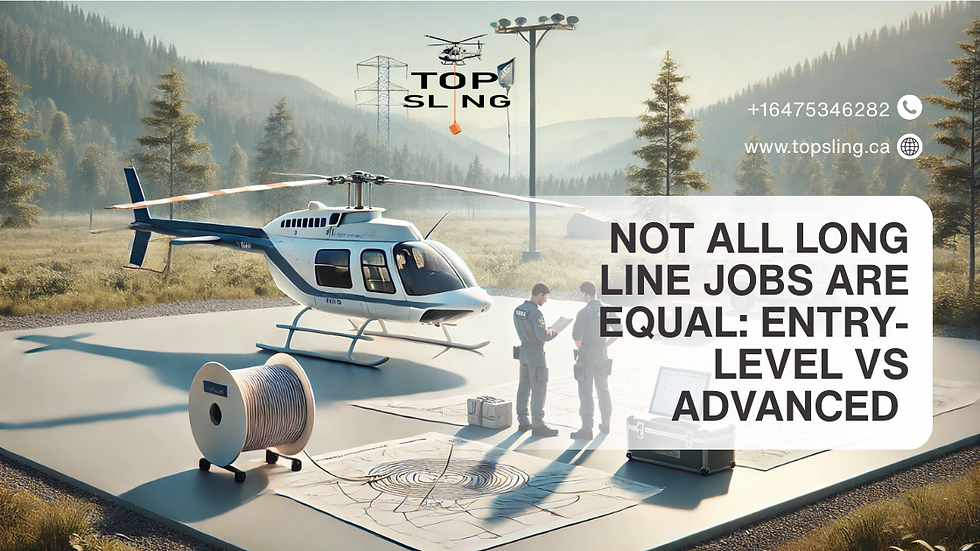
Not All Long Line Jobs Are Equal: Entry-Level vs Advanced Operations

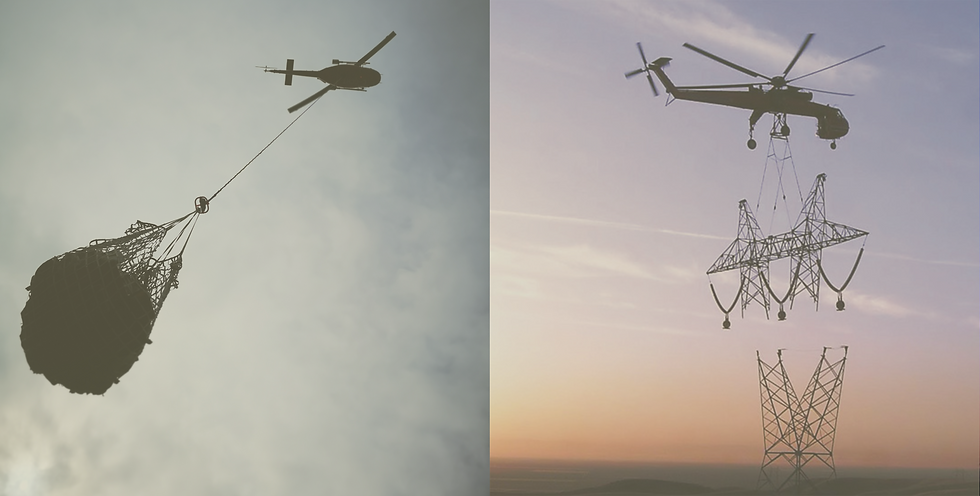
When people first get into long line flying, there’s often an assumption that all external load work is roughly the same. You’re picking something up, moving it, and putting it down somewhere else.
In reality, the gap between entry-level and advanced long line operations is significant.
At the entry level, most work involves relatively simple cargo movements. These are typically loads that don’t require high precision placement things like fuel drums, generators, or equipment transported in nets. The objective is straightforward: move the load safely from one location to another and set it down in a general area.
This type of work is where most pilots begin, and it plays an important role in building fundamental skills. You learn how the load behaves, how to maintain stability, and how to manage your sight picture over longer lines. It’s also where you develop confidence in external reference flying.
However, as you progress, the nature of the work changes.
Advanced long line operations introduce a completely different level of complexity. Here, it’s no longer enough to place a load “close enough.” You may be required to position equipment with centimeter-level accuracy. Examples include drill moves, tower construction, and certain types of powerline work, where the load must be set precisely into a defined location.
These operations demand a much higher level of control and awareness. Small inputs matter, and even minor oscillations can make the task significantly more difficult. Environmental factors such as wind, terrain, and confined spaces further increase the challenge.
Another key difference is the pace and pressure of the work. Advanced jobs are often time-sensitive and highly visible. There may be multiple crews waiting on your placement, and delays can have a direct impact on the overall project. That adds a layer of operational pressure that isn’t always present in simpler jobs.
Understanding this progression is important for pilots planning their careers. Moving from entry-level to advanced work isn’t just about accumulating hours it’s about developing the precision, consistency, and judgment required for more demanding tasks.
It also highlights why structured training can play such an important role early on. Building a strong foundation makes it much easier to transition into advanced operations later, rather than trying to bridge that gap under pressure on a live job site.
In long line flying, experience matters but the type of experience matters just as much.

Comments